
What Is a Cochlear Implant and How Does It Work?
A cochlear implant is an electronic device that can provide auditory sensation to a person with severe to profound sensorineural hearing loss. It is made up of pieces worn outside the ear and pieces surgically placed inside the ear.
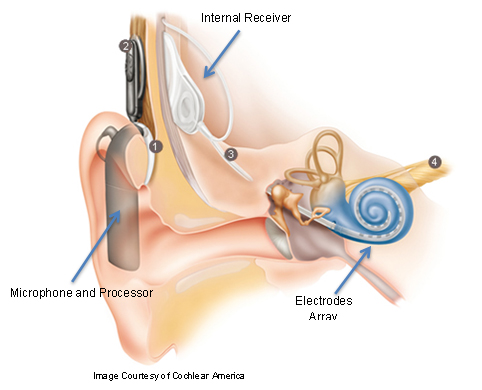
During surgery, a cut is made behind the ear and the internal piece is secured under the skin and hair. The electrode array is put into the cochlea, stimulating the hearing nerve. Microphones on the sound processor pick up sounds and the processor converts them into digital information. This information is transferred through the coil to the implant just under the skin.
The implant sends electrical signals down the electrode into the cochlea.
The hearing nerve fibers in the cochlea pick up the signals and send them
to the brain, giving the sensation of sound.
Is a Cochlear Implant Right for Your Child?
Read frequently asked questions about cochlear implants and the implantation process at The Bristol-Myers Squibb Children's Hospital, and learn about eligibility for the Pediatric Cochlear Implant Program.


