“From the moment I entered the cancer center, I felt a sense of comfort. From the receptionists to the lab technicians to the nurses, I felt seen, supported, and never judged.”
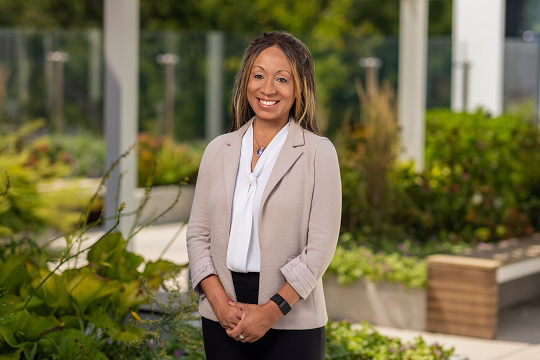
When Heather Greulich first met with Anna Litvak, MD, a medical oncologist at Cooperman Barnabas Medical Center in July 2025, she arrived determined to face her breast cancer diagnosis head-on. But determination did not erase the fear that came with suddenly becoming a patient.
“I walked into her office determined and hopeful, but also scared,” Heather recalled. “From the moment I entered the cancer center, I felt a sense of comfort. From the receptionists to the lab technicians to the nurses, I felt seen, supported, and never judged.”
A licensed psychotherapist and addiction professional who has spent more than two decades working in mental health and substance use programs, Heather is accustomed to helping others navigate difficult circumstances. Professionally, she serves as a Chief Operating and Clinical Officer for a nonprofit residential addiction treatment program and as Executive Director of a co-occurring adolescent program.
“Treatment is deeply personal, it’s intimate,” she said.
Heather was diagnosed in June 2025 with triple-negative invasive ductal carcinoma (IDC), an aggressive form of breast cancer. Before beginning treatment, genetic testing also revealed that she carries a gene mutation, which can be associated with an increased risk for higher-grade disease and an increased likelihood of lymph node involvement.
With that information, Heather and her care team developed an aggressive treatment plan that included chemotherapy followed by a bilateral mastectomy, oral chemotherapy and a year of immunotherapy.
Under the care of Dr. Litvak, Heather was also presented with the opportunity to participate in the I-SPY clinical trial, which uses a more personalized approach to treatment for patients with high-risk breast cancer by adapting therapy based on how an individual patient responds.
It was not a decision Heather made lightly. She brought the clinical trial information home and reviewed it carefully with her sister, Hollie, who has been beside her throughout her treatment.

For Heather, participating in the trial also represented an opportunity to contribute to something beyond her own treatment. “There was something bigger: the possibility that what was learned from my treatment could help shape the future for someone else facing the same fight,” she said.
“This clinical trial allowed us to closely evaluate how an individual is responding to treatment and make adjustments when needed,” shares Dr. Litvak. “Heather approached every step of her treatment with tremendous strength and determination. She embraced the opportunity to participate in the clinical trial and how her participation would contribute to the research that helps us better understand breast cancer care in the future.”
When her response to her initial treatment regime was limited, the individualized nature of the clinical trial allowed her treatment to be adjusted.
The change proved significant. The tumor responded enough for Heather to undergo a successful surgery. “All margins were negative. Three lymph nodes were removed, and there was no evidence of metastatic disease,” Heather said.
Her recovery has continued beyond surgery. Heather experiences lymphedema in her right arm and attends physical therapy twice a week, a reminder that recovery from cancer does not always follow a straight path.
“What I’ve learned through all of this is that healing is not linear,” Heather said. “Some days, you feel strong enough to forget everything your body has endured, and then the next day, your body reminds you.”
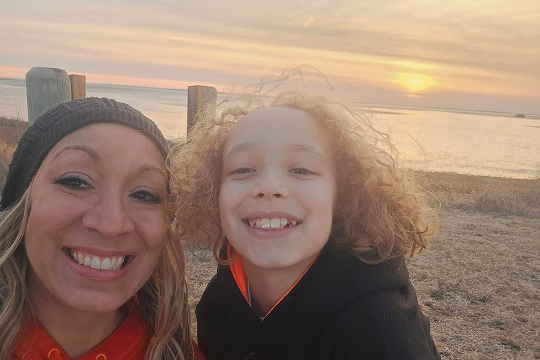
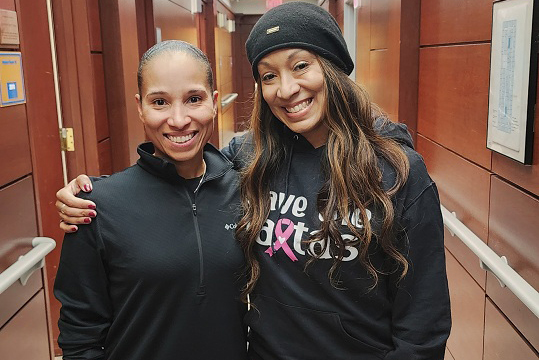
Throughout her diagnosis and treatment, Heather has drawn strength from her family, including her 10-year-old son, whom she calls her “heart and greatest motivation,” and her sister, who accompanied her to appointments and infusions. She also credits friends and colleagues with helping carry her through some of the most difficult moments.
“I would not have made it through this journey without the unwavering support of my family, friends, and colleagues,” she said. “Whether it was flowers, funny T-shirts and socks, or simply the right words at the right time during my darkest moments, they showed up, again and again, and carried me when I needed it most.”
Heather has also learned to extend some of the same compassion to herself that she has spent her career providing to others. “I’ve learned the importance of grace, of giving it to myself, and leaning into my faith,” she said.
As she continues moving forward, Heather carries with her a lesson that has shaped the way she approaches both the difficult days and the hopeful ones.
“If there’s one thing I’ve come to believe, it’s this: mindset matters,” Heather said. “It may not control everything, but it shapes how we move through even the hardest moments, and how we find strength we didn’t know we had.”
Cooperman Barnabas Medical Center serves as the northern destination for the integrated oncology services of RWJBarnabas Health and Rutgers Cancer Institute, the state’s only National Cancer Institute-designated Comprehensive Cancer Center.