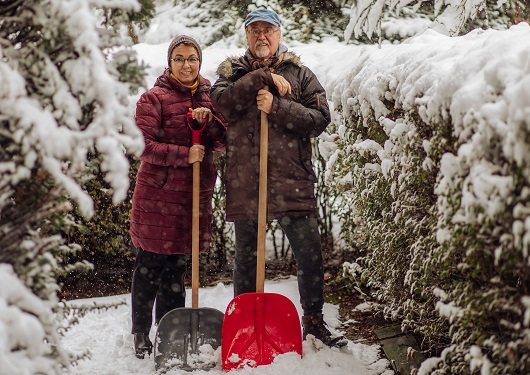
“Winter weather brings more than cold temperatures. It brings an increased risk to heart health. Each year, we see a noticeable rise in emergency room visits during the winter months, particularly following severe weather events when activities like shoveling snow place sudden strain on the heart,” says Justin Fox, MD, a board-certified cardiologist and interventional cardiologist, Chair of the Department of Cardiology at RWJUH Hamilton, and member of Hamilton Cardiology Associates. “As a cardiologist, I want to share important facts about why heart attacks are more common in winter and what steps you can take now to protect your heart and stay safe all season long.”

How cold weather affects the heart:
- Low temperatures cause blood vessels and arteries to constrict and narrow. This includes the coronary arteries that supply blood to the heart.
- Blood flow is restricted and the delivery of oxygen to the heart is reduced.
- Extreme exertion while shoveling snow can cause a sudden spike in blood pressure and heart rate
- The combination of narrowed coronary arteries in cold weather and increased blood pressure in those arteries can cause rupture of cholesterol plaque in the heart’s arteries, which itself is the cause of most heart attacks.
How to safeguard your heart:
- Have regular physicals and speak to your doctor about risk factors that could impact your ability to participate in cold weather activities like snow shoveling or pulling a sled.
- Dr. Fox recommends that people who are not routinely physically active or those with known cardiovascular disease should avoid activities with sudden extreme exertion such as shoveling snow.
- When shoveling, it’s best to push the snow instead of lifting and tossing the snow with a shovel. Try to move a small amount of snow at a time and take frequent breaks.
- When spending time outdoors, be sure to dress warmly and take breaks to go inside.
- Always be in tune with how your body is feeling. A heart attack doesn’t always present as chest pain. This is especially true for women.
- Immediately stop and seek medical help if you experience chest pain, pressure, dizziness, palpitations, or severe shortness of breath while shoveling.
Together, let’s protect your heart this winter.
REMEMBER! Call 9-1-1 immediately if you suspect you or someone you are with is having a heart attack or medical emergency. Do not drive yourself or someone else to the hospital. Call 9-1-1
To make an appointment with one of New Jersey’s top cardiovascular specialists, visit rwjbh.org/heart or call 888-724-7123.