“I would recommend Cooperman Barnabas Medical Center to anyone who needs heart care.”
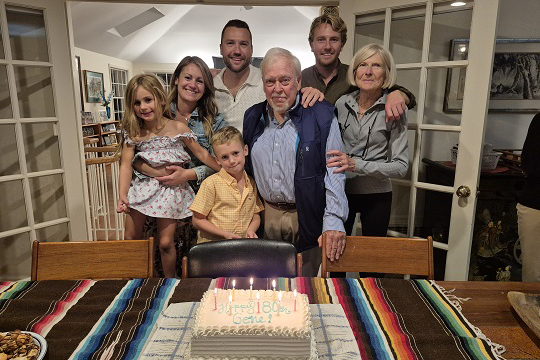
When Kathleen Tabor, 78, underwent open-heart surgery in April to repair a mitral valve prolapse, she knew recovery would take time, but she didn’t expect the journey to include a second heart procedure just months later.
Following the initial surgery, Kathleen focused on slowly rebuilding her strength, “At first, I couldn’t even walk up the street,” she recalls. “But by July, I was hiking again, nothing extreme, but I was out there, moving, and feeling better.”
However, during a follow-up appointment, her care team discovered a new issue, tricuspid regurgitation.
“The tricuspid valve, one of the heart’s four valves, helps ensure blood flows in the correct direction through the heart,” explains Arash Salemi, MD, Clinical Chairman of Cardiothoracic Surgery, RWJBarnabas Health - Northern Region. “When the valve does not close properly, blood can leak backward, placing extra strain on the heart and often causing fatigue, shortness of breath and reduced stamina.”
Since Kathleen had already experienced open-heart surgery at Cooperman Barnabas Medical Center with Dr. Salemi, she felt confident returning to a place and team she trusted. Rather than feeling like she was starting over, she felt reassured by the continuity of care and the collaboration among her care team.
“The care I received the first time was extraordinary. When I needed a second procedure, I felt completely comfortable placing my care in their hands again,” Kathleen said. “I trusted their judgement, and I knew the team was going to make the right decision for me. I would recommend Cooperman Barnabas Medical Center to anyone who needs heart care”

Working together, her team, cardiologist Robert Charney, MD, interventional cardiologist Aaron Horne, MD, cardiac surgeon Dr. Salemi, Bruce J. Haik, MD, FACC, FSCAI,Chief of the Division of Cardiology and Director of the Cardiac Catheterization Lab at Cooperman Barnabas Medical Center and member of the RWJBarnabas Medical Group, and her advanced practice providers, quickly assembled a plan.
Kathleen underwent a minimally invasive transcatheter tricuspid valve replacement, a newer approach that allows doctors access the heart through the large blood vessels to treat the valve without traditional open-heart surgery.
“Until recently, treatments for tricuspid valve disease have been limited to medication and open-heart surgery,” explains Dr. Salemi. “Now thanks to new research and technologies, there are multiple treatment options for treating tricuspid valve disease, including new devices and minimally invasive strategies for repair and replacement.”
“This minimally invasive approach helps us achieve the same results as open-heart and is often associated with shorter hospital stays, less pain, and faster recovery,” adds Dr. Salemi.
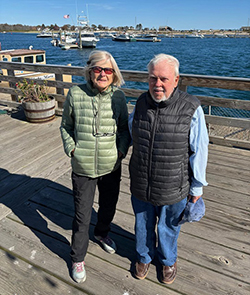 Kathleen realized this difference in recovery between her two cardiac procedures. Unlike her open-heart surgery, which required a longer stay in the hospital followed by cardiac rehabilitation, Kathleen was discharged the day after her transcatheter tricuspid valve procedure.
“The rapidity surprised me,” Kathleen said. “After the first surgery, I struggled to walk even a slight incline. After this one, I felt stronger almost right away.”
Today, Kathleen continues to focus on healing while adjusting her expectations. As an active outdoorswoman, she is easing back into walking and hiking, prioritizing stamina over speed.
About CBMC’s Heart and Vascular Care
No one plans on heart problems, but everyone should have a plan for them. Make a plan for your heart health at Cooperman Barnabas Medical Center. Our multidisciplinary team of experts provide comprehensive, compassionate care. Learn more about our programs and specialties, which include diagnosis, treatment, and continued support for people living with cardiovascular and thoracic conditions.