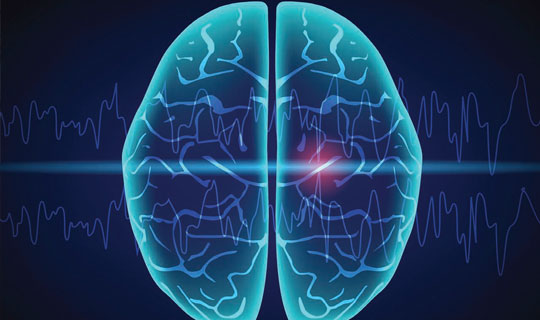
Researchers find a new way to tell who could benefit most from epilepsy surgery.
Epilepsy can be difficult on many levels. Various types of seizures that are part of this neurological disorder can disrupt normal life. And outcomes from treatments such as medications and surgery can be challenging to predict.
Now an advance from researchers at RWJBarnabas Health (RWJBH) and Rutgers Health is helping to clarify some of the uncertainties about surgical treatment. The researchers’ new findings may encourage patients to seek effective care that they otherwise might have avoided.
Seizures from epilepsy arise when nerve cells don’t signal properly, causing surges of electrical activity that can affect brain and muscle function.
Medications can help people with epilepsy experience fewer or less-intense seizures. But finding the right medications in the right combinations at the right doses can be difficult. About a third of the nearly 3 million Americans who have epilepsy don’t respond adequately to medications.
For these patients, surgery to remove or disable the part of the brain causing seizures can be an effective treatment. Surgical options include traditional open surgery along with minimally invasive approaches that use laser technology. But which patients will emerge seizure-free after surgery often isn’t clear ahead of time.
Gauging Success
To help address the challenge of predicting outcomes, RWJBH and Rutgers researchers, along with colleagues at Emory University, honed complex methods to create a simple scoring system. The scoring can give doctors a more precise idea of when patients will likely become seizure-free after minimally invasive epilepsy surgery. The researchers’ study, published in the Annals of Clinical and Translational Neurology, introduces a predictive model—a statistical tool that uses past data to identify patterns and create forecasts—that could expand access to surgical treatment. Experts say surgery for epilepsy is underused, so a tool that better identifies good candidates for procedures could potentially result in life-changing improvements for more patients.
Many patients hesitate to undergo traditional open, invasive brain surgery out of concern about the pain and recovery associated with it as well as the possibility of cognitive side effects. Minimally invasive laser procedures may be more appealing, especially if patients can get a clearer picture of their chances for success.
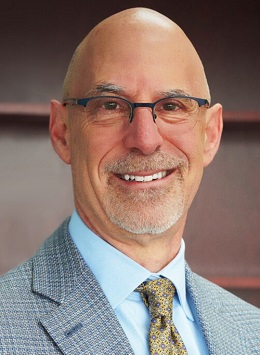
“We’ve pried open the therapeutic window with this minimally invasive approach,” says Robert Gross, MD, senior author of the study, who is Senior Vice President of Neurosurgical Services and co-lead of Neuroscience at RWJBH and chair of the Department of Neurosurgery at Rutgers Robert Wood Johnson Medical School and Rutgers New Jersey Medical School. “Now the question is, how well do we think the patients are going to do [based on] the information we have before doing the procedure?”
The predictive model that researchers developed draws on data from 101 patients who underwent a minimally invasive treatment called SLAH (stereotactic laser amygdalohippocampotomy). This procedure uses a type of laser therapy called LITT (laser interstitial thermal therapy) to target and disable a small area of the brain that causes seizures in many patients.
Using an innovative approach, researchers identified eight clinical factors associated with a higher likelihood of becoming seizure-free after the SLAH procedure. The factors include the patient’s history, certain abnormalities in results of their MRI scans, brain lesions and the presence or absence of certain signs and symptoms.
A Simple Score
In their approach, the researchers chose not to rely on complex statistical models. Instead, the team created a simple 8-point score, assigning a point for each factor present.
This approach outperformed other predictive models. For example, it did better than models based on more complex multivariate analyses (which simultaneously consider numerous variables) or those based solely on results from MRI scans (a common way to predict surgery outcomes).
Patients scoring 6 or higher on the 8-point scale had a 70 to 80 percent chance of becoming seizure-free after SLAH—a success rate comparable to that of conventional open surgery. Those with lower scores had progressively lower chances of a positive outcome.
Dr. Gross has already seen how the new scoring system could help patients gauge their options. With one recent patient, “I was able to go to this young woman and her mother and say, ‘OK, let’s look at this: You’ve got a 71 percent chance of being seizure-free,’” he says.
While such uses are now possible, researchers say the model still needs further validation using larger amounts of data on patient outcomes. They also note that the scoring system doesn’t account for all factors that might affect surgical outcomes, such as the exact ratio of abnormal brain activity between hemispheres of the brain or specific seizure traits.
Despite these limitations, the study authors say their work represents a significant step in personalizing epilepsy treatment. Providing a more nuanced and accurate prediction of surgical outcomes with this new tool could help more patients with drug-resistant epilepsy find effective relief through minimally invasive surgery.
As research continues, further refinements to the model are in store. With more data and more study, researchers look toward developing even more precise predictions—and better patient outcomes.
Learn more about neurosurgery at RWJBarnabas Health, or request an appointment.
 View full issues of Healthy Together magazine by New Jersey region:
Northeast, serving the community of Jersey City Medical Center in Jersey City
Northwest, serving the communities of Clara Maass Medical Center in Belleville, Cooperman Barnabas Medical Center in Livingston, Newark Beth Israel Medical Center in Newark, Robert Wood Johnson University Hospital in Rahway, and Trinitas Regional Medical Center in Elizabeth
Central, serving the communities of Robert Wood Johnson University Hospital in Hamilton, New Brunswick and Somerset
South, serving the communities of Community Medical Center in Toms River, Monmouth Medical Center in Long Branch, and Monmouth Medical Center Southern Campus in Lakewood