What to Know About a Highly Specialized Therapy That’s Transforming Cancer Care
Michael Hreha needed another option. Diagnosed in 2019 with non-Hodgkin lymphoma, a type of cancer that affects the body’s lymphatic system, he had already undergone chemotherapy. By summer 2024, the 76-year-old’s cancer had become resistant to the treatment.

MBA, MSc
Andrew M. Evens, DO, MBA, offered an alternative. As Deputy Director for Clinical Services and Chief Physician Officer, Rutgers Cancer Institute and Jack & Sheryl Morris Cancer Center, and System Director of Medical Oncology, and Oncology Lead, RWJBarnabas Health Medical Group, Dr. Evens knew that Michael could benefit from a groundbreaking type of immunotherapy that uses a patient’s own immune cells to fight cancer.
Called CAR T-cell therapy, the highly specialized treatment is part of a transformative area of research known as cell therapy. Michael is just one of hundreds of patients throughout New Jersey and beyond that RWJBarnabas Health (RWJBH), together with Rutgers Cancer Institute, the state’s only National Cancer Institute-designated Comprehensive Cancer Center, have treated using CAR T-cell therapy.
“I am incredibly grateful for the opportunity to receive CAR T-cell therapy close to home,” says Michael. “This treatment has given me a chance to fight back against my cancer and spend more time with my two sons and four grandchildren. I’m looking forward to the future with renewed optimism.”
“Having administered hundreds of CAR T-cell treatments to date is a major milestone,” says Dr. Evens, who is an international leader in lymphoma treatment and research. “It demonstrates our commitment to offering cutting-edge therapies close to home and providing hope to patients like Michael who may have felt their options were exhausted.”
Only a handful of cancer centers across the country provide CAR T-cell therapy, giving New Jersey residents served by the RWJBH system access to a significant oncology advance. Here are key facts you need to know.
How Car T-Cell Therapy Works
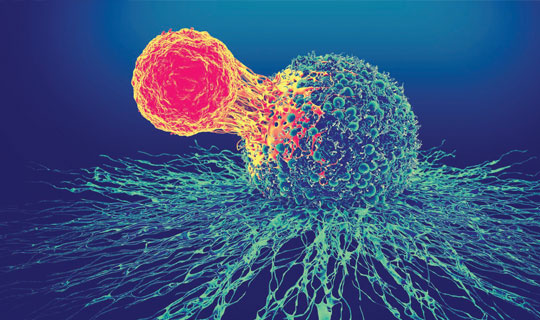
Doctors collect T cells (immune system cells that fight illness) from a patient’s blood through an infusion-like process called apheresis. Scientists modify the T cells in a lab, adding a special receptor called a chimeric antigen receptor (CAR) that enables the T cells to seek out and kill cancer cells. When the reengineered CAR T cells are returned to the patient through an infusion, they multiply, seek out cancer cells, attach to them and destroy them.
As the immune system aggressively fights the cancer, most patients experience temporary side effects. Many undergo a phase akin to a severe flu marked by high fever, body aches and fatigue. Medication can help relieve these side effects, and most patients readily recover.
CAR T-cell therapy has shown remarkable success in treating advanced cases of cancers such as blood cancers, lung cancer, melanoma, advanced bladder cancers and more.
How It’s Different
Unlike traditional treatments like chemotherapy or radiation, which attack both cancer cells and healthy cells, CAR T-cell therapy precisely targets cancer at the cellular level. By harnessing the patient’s own T cells to recognize and destroy cancer cells, CAR T-cell therapy provides a targeted, personalized approach to cancer treatment.
Why It’s Significant
CAR T-cell therapy operates as a “living drug,” with the potential to provide long-lasting responses, as T cells may continue to fight cancer if there’s a relapse. The therapy may lead to lasting remission and even cure some diseases that have resisted other therapies, giving new hope to patients who even several years ago might otherwise have succumbed to their cancer.
The therapy offers the added advantage of relatively short treatment time and recovery compared with, for example, chemotherapy.
Where It’s Available
Because it’s a highly personalized treatment, CAR T-cell therapy is available at a limited number of cancer centers around the country with specialized expertise in cellular therapies. For example, centers offering CAR T-cell therapy for blood cancers must also perform stem cell transplants, be certified by the Foundation for the Accreditation of Cellular Therapy and have specially trained clinicians and health care professionals to administer the treatment.
Together, RWJBH and Rutgers Cancer Institute meet these requirements, and their experts are among the nation’s most knowledgeable and experienced in treating blood cancers with immunotherapy. Doctors throughout the RWJBH system collaborate to carefully evaluate all treatment options for a given cancer to decide who is a good candidate for CAR T-cell therapy.
Why Local Care Matters
Cancer doesn’t travel well, especially when care is as complex as cellular therapy. CAR T-cell therapy requires multiple stages of care; transitions between providers; coordination and transportation between doctors, labs and manufacturing facilities; and close communication between members of multidisciplinary teams.
Once treatment is completed, the focus shifts to community oncologists for ongoing support and continuity of care. Having all of these resources and capabilities available in a single health system such as RWJBH helps ensure a seamless patient journey.
What’s Ahead
Researchers are looking for ways to treat more types of cancer using cellular therapy, and to make treatment safer and more effective. Clinical trials to test new innovations in CAR T-cell therapies aim to broaden not only the range of treatable cancers but also the population of people who can receive it. RWJBH and Rutgers Cancer Institute are driving the development of next-generation CAR T-cell therapies through on-site research, which will further propel the future of cancer discovery and care.
RWJBarnabas Health, in partnership with Rutgers Cancer Institute—the state’s only NCI-designated Comprehensive Cancer Center—provides close-to-home access to the most advanced treatment options.
To schedule an appointment with one of our cancer specialists, call 844-CANCERNJ or visit Cancer Care at RWJBarnabas Health.
 View full issues of Healthy Together magazine by New Jersey region:
Northeast, serving the community of Jersey City Medical Center in Jersey City
Northwest, serving the communities of Clara Maass Medical Center in Belleville, Cooperman Barnabas Medical Center in Livingston, Newark Beth Israel Medical Center in Newark, Robert Wood Johnson University Hospital in Rahway, and Trinitas Regional Medical Center in Elizabeth
Central, serving the communities of Robert Wood Johnson University Hospital in Hamilton, New Brunswick and Somerset
South, serving the communities of Community Medical Center in Toms River, Monmouth Medical Center in Long Branch, and Monmouth Medical Center Southern Campus in Lakewood