
Thoracic Outlet Syndrome
The thoracic outlet is the narrow space between the lower neck and upper chest that is bordered by the clavicle (collar bone), the first rib, the sternum and the pectoralis minor muscle (Picture). It is important because the artery that brings blood to your arm from your heart, the vein that brings blood to your heart from your arm, and the nerves that provide movement and sensation for your arm all pass through that space.
Thoracic outlet syndrome (TOS) occurs occur when the nerves, vein or artery in the thoracic outlet are compressed and create symptoms. Thoracic outlet syndrome is a broad term that covers three types of TOS: neurogenic, venous and arterial.
Common symptoms for these syndromes include pain, numbness, tingling, weakness, swelling, heaviness, easy fatiguability or temperature change in the shoulder, arm or hand. Thoracic outlet syndrome and many other conditions can cause these symptoms, and TOS can affect anyone, so establishing the correct diagnosis is key.
RWJBarnabas Health offers comprehensive evaluation, diagnosis and treatment of patients with neurogenic, venous and arterial thoracic outlet syndrome by a team of experts.
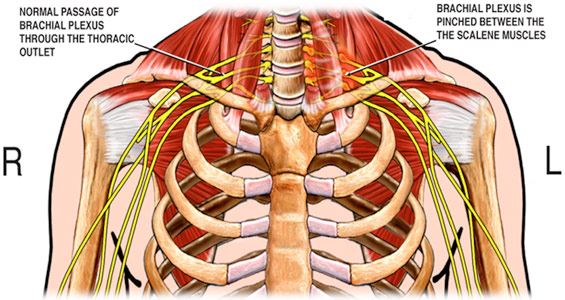
Medical Illustration Copyright © 2019 Nucleus Medical Media, All rights reserved.
Thoracic Outlet Syndrome Program
The Thoracic Outlet Syndrome Program at RWJBarnabas Health brings together experts from multiple medical and surgical specialties to provide coordinated, personalized and patient-centered care for people with TOS.
TOS can affect people of all ages. We have both adult and pediatric programs. As TOS is common among athletes who use a lot of arm motions or do heavy lifting with their upper bodies, we are experienced in evaluating and treating all levels, from adolescents in high school to collegiate level to professionals.
Evidence-Based Treatments
The Thoracic Outlet Syndrome Program at RWJBarnabas Health brings specialists together to confirm whether TOS is causing a patient’s symptoms and develop an individualized treatment plan. Through coordinated care, proven methods and advanced technology, the team focuses on the most helpful evaluations and tests; if TOS is not the cause, specialists can help guide the patient toward appropriate care and relief. Our doctors’ close collaboration speeds up the process of diagnosis and treatment, which might otherwise be extended by the need to visit different doctors individually.
Treatments We Offer
Treatment options for TOS may include:
- Physical therapy
- Image-guided injections such as interscalene blocks
- Surgical options when appropriate, including minimally invasive robotic surgical techniques.
Our Team
Depending on each patient’s symptoms and type of TOS, care may include experts from RWJBarnabas Health Medical Group:
- Thoracic surgeons
- Neurologists
- Sports medicine doctors
- Medical doctors specializing in the treatment of blood clots
- Physical medicine and rehabilitation physicians
- Radiologists
- Vascular surgeons
- Orthopedic surgeons
- Neurosurgeons
- Pediatric surgeons
Therapists from JAG Physical Therapy also work closely with RWJBarnabas Health as part of a patient’s treatment or for post-surgical needs.
Locations
The Thoracic Outlet Syndrome Program is available at:
- Monmouth Medical Center (MMC) in Long Branch
- Robert Wood Johnson University Hospital (RWJUH) in New Brunswick
- Cooperman Barnabas Medical Center (CBMC) in Livingston
- Jersey City Medical Center (JCMC) in Jersey City
To request an appointment or refer a patient to the Thoracic Outlet Syndrome Program, call 732-818-3811 (MMC and RWJUH), 973-322-6757 (CBMC and JCMC)
Learn more about thoracic outlet syndrome symptoms, causes, diagnosis and treatment options below.
Types of Thoracic Outlet Syndrome: Neurogenic, Venous and Arterial TOS
There are three types of thoracic outlet syndrome, each named for the structure within the thoracic outlet that is compressed: neurogenic (brachial plexus), venous (subclavian vein) or arterial (subclavian artery):
- Neurogenic thoracic outlet syndrome (NTOS): The most common type of TOS, neurogenic thoracic outlet syndrome occurs when the brachial plexus, a network of nerves that runs from the spine through the neck and into the arm, becomes compressed. NTOS is often associated with repetitive overhead arm movements at work or in sports such as swimming or baseball.
- Venous thoracic outlet syndrome (VTOS): Venous TOS occurs when the subclavian vein, which carries blood from the arm back to the heart, is compressed. Certain athletes can be at risk of this condition. Repetitive arm or shoulder activity causing growth of muscles and compression of the vein can contribute to symptoms.
- Arterial thoracic outlet syndrome (ATOS): Arterial TOS occurs when the subclavian artery, which carries blood from the heart to the arm, is compressed. It may be associated with an extra cervical rib or an unusually shaped first rib, which can narrow the artery and affect blood flow. The change in blood flow can lead to blood clots.
Thoracic Outlet Syndrome Causes and Risk Factors
Thoracic outlet syndrome is caused by abnormal compression of the nerves or blood vessels that pass through the thoracic outlet. When these structures are compressed, irritated or injured, symptoms can develop in the neck, shoulder, arm or hand. Several conditions, traits and habits may increase the risk of TOS. The more risk factors a person has, the greater the chance of developing thoracic outlet syndrome.
Pregnancy is one non-modifiable risk factor for thoracic outlet syndrome. Other factors that may contribute to TOS include:
-
Modifiable risk factors: These factors can be modified, treated or controlled through medications
or lifestyle changes.
- Heavy weightlifting
- Poor posture
- Sports that involve repetitive arm or shoulder movement.
- Carrying heavy shoulder loads.
- Depression
-
Other conditions that contribute to the development of TOS:
- Anatomical abnormalities that are present at birth
- Bony and soft tissue abnormalities
- Trauma from injury
- Tumors or large lymph nodes in the upper chest or underarm area
Thoracic Outlet Syndrome Symptoms
Symptoms of thoracic outlet syndrome vary based on whether nerves, veins or arteries are compressed. Common symptoms may include arm pain, numbness, tingling, weakness, swelling, color changes or coldness in the hand or fingers.
Signs and Symptoms When Nerves Are Compressed
- Gilliatt-Sumner hand: a condition in which muscles of the hand, particularly around the base of the thumb, atrophy or waste away
- Numbness or tingling in the arm or fingers
- Pain or aches in the neck, shoulder or hand
- Weak grip
Signs and Symptoms When Veins Are Compressed
- Arm fatigue with activity
- Arm pain and swelling
- New veins on the surface of the chest and arm
- Blood clot in veins in the upper area of the body
- Bluish color of the hand or arm
- Numbness or tingling in the fingers
- Throbbing lump near your collarbone
- Weakness of arm or neck
Signs and Symptoms When Arteries Are Compressed
- Sudden onset of hand pain and weakness
- Numbness and tingling in the fingers
- Cold and pale fingers
- Loss of pulse in the arm
- Chronic arm fatigue with use
- Non-healing wounds or ulcerations in the fingers
Thoracic Outlet Syndrome Diagnosis
Diagnosing thoracic outlet syndrome can be challenging because symptoms vary from person to person and may overlap with other conditions. A doctor may review symptoms and medical history, perform a physical exam and recommend diagnostic testing to evaluate nerve or blood vessel compression. Tests and procedures used to diagnose TOS may include:
- X-Rays
- Computed tomography (CT scan)
- Magnetic resonance imaging (MRI)
- Electromyography (EMG)
- Provocation tests with physical exam
- Ultrasound
- Angiogram/Venogram (Endovascular procedures)
- Anterior scalene muscle or other muscle blocks
Thoracic Outlet Syndrome Treatment Options
Treatment for thoracic outlet syndrome depends on the type of TOS, the severity of symptoms and the structures involved. In some cases, conservative treatment can be effective, especially when TOS is diagnosed early. Conservative care often combines medical management, physical therapy and lifestyle changes. Treatment options may include:
Lifestyle Changes and Physical Therapy
- Avoid activities that worsen symptoms.
- Avoid carrying heavy bags over your shoulder.
- If overweight, talk to the doctor about weight-loss options.
- Maintain good posture.
- Take frequent breaks at work to move and stretch.
- Make and keep appointments to see a doctor for routine check-ups and follow-up tests.
Medications for Thoracic Outlet Syndrome
- Anti-inflammatory medications may help reduce inflammation and relieve pain.
- If you develop blood clots secondary to VTOS, anticoagulation medication is used to help prevent progression
Thoracic Outlet Syndrome Procedures and Surgery
- Endovascular thrombolysis may be used to treat a new blood clot in a vein. During this minimally invasive procedure, medication is delivered through a catheter to help dissolve the clot and restore blood flow.
- Thoracic outlet decompression is surgery that creates more space for compressed nerves or blood vessels. The procedure may involve removing part of a rib or releasing tight muscles and other tissue, depending on the cause of compression.
- Interscalene blocks or other image-guided injections may be recommended when appropriate. These injections can help relieve symptoms and may also help the care team determine which muscles or nerves are contributing to the condition.
- Minimally invasive robotic-assisted thoracic outlet decompression uses small incisions and robotic technology to create more space in the thoracic outlet. This approach helps the surgeon reach the treatment area with precision and may support a smoother recovery for some patients.
To request an appointment or refer a patient to the Thoracic Outlet Syndrome Program, call 732-818-3811 (MMC and RWJUH), 973-322-6757 (CBMC and JCMC)