“I wouldn’t be here without Dr. Albert, Dr. Elsaid, and all the doctors and nurses who cared for me. They saved my life.”
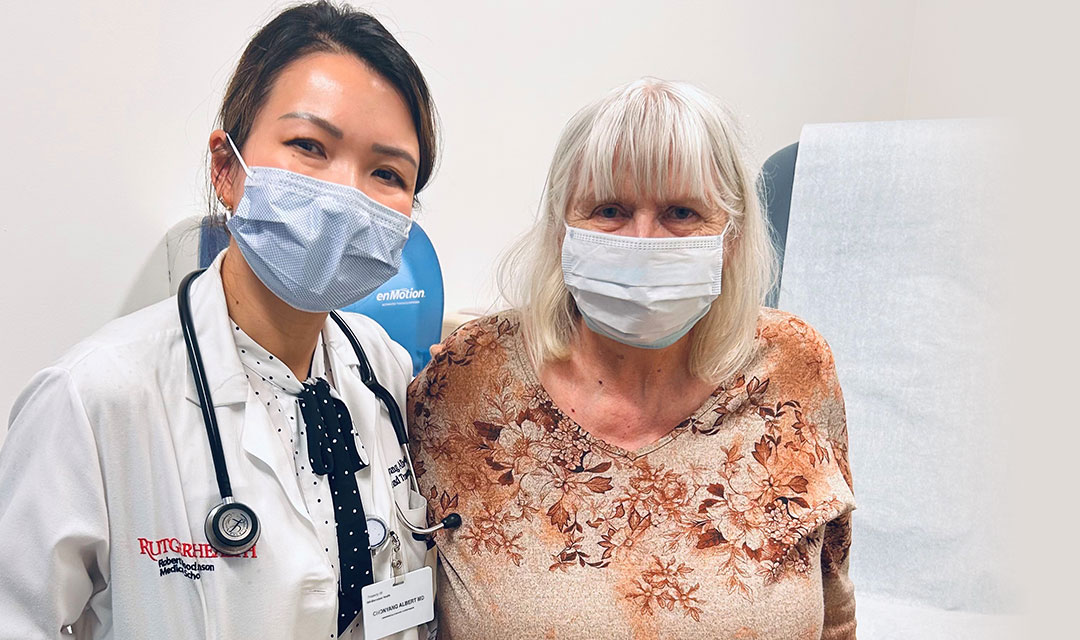
Cardiogenic shock is a life-threatening condition in which the heart suddenly cannot pump enough blood to meet the body’s needs. Without immediate intervention, organs quickly begin to shut down. When 75-year-old Sandra McQueeney collapsed at home last September, she had no idea she was about to face it.
She considered herself healthy, other than experiencing unexplained falls and heart palpitations more frequently. She stuck to her daily routine and enjoyed caring for her great-granddaughter.
“I thought it was my iron deficiency anemia again,” she recalls, as it was something that had been greatly affecting her. “I was so tired. But then I passed out, and I knew something was seriously wrong.”
At another local hospital, doctors discovered Sandra’s blood pressure and heart rate were dangerously low. An emergent heart catheterization revealed Takotsubo cardiomyopathy, also known as “broken heart syndrome,” complicated by cardiogenic shock.
Like the name implies, “broken heart syndrome” or sudden heart failure, causes the heart muscle to weaken and bulge, and is triggered by stressful life events, like the sudden passing of a loved one or another traumatic event. Less than 5% of the population, but older women more often than men, experience this condition.
Her interventional cardiologist recognized how critical her condition was and immediately contacted the Cardiogenic Shock Team at Robert Wood Johnson University Hospital (RWJUH) in New Brunswick, part of the RWJBarnabas Health Heart and Vascular network of care. Sandra was transferred overnight, where she was immediately placed on VA ECMO to help pump her heart and lungs—followed by an Impella heart pump to help stabilize her circulation. Later, she received a pacemaker to regulate her heart rhythm.
“There were nights when they weren’t sure I’d make it,” Sandra says. “But I had such caring people fighting for me. I feel very fortunate to be alive.”
Kelly, her daughter and caregiver, echoes her sentiment: “There were a lot of bumps in the road with my mom’s health after she went into cardiogenic shock. So many excellent doctors and nurses cared for her, updating me on her condition every step of the way.”
After several weeks in the hospital followed by rehabilitation, Sandra returned home just before Thanksgiving. Today, she is regaining strength and enjoying time with her daughter, great-granddaughter, and her loyal dog, Bella.
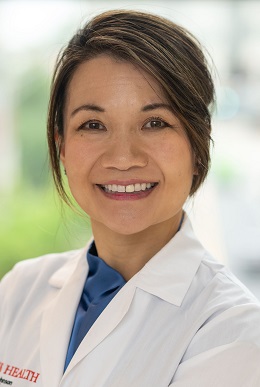
FACC, FHFSA
“I wouldn’t be here without Dr. Albert, Dr. Elsaid, and all the doctors and nurses who cared for me,” Sandra explained. “They saved my life.”
Under the leadership of Chonyang L. Albert, MD, FACC, FHFSA, RWJUH launched its multidisciplinary Cardiogenic Shock program in September 2024, bringing together specialists from advanced heart failure, interventional cardiology, cardiothoracic surgery, critical care, advanced practice providers and mobile health services to deliver 24/7 care for the sickest patients. Now celebrating its one-year anniversary, the program played a pivotal role in saving Sandra’s life, with Dr. Albert leading her care alongside Ossama Elsaid, MD, Hirohisa Ikegami, MD, cardiothoracic surgeon, and Maya Guglin, MD, section chief of Heart Failure at RWJUH and Rutgers Robert Wood Johnson Medical School (RWJMS). Drs. Albert, Ikegami, and Guglin are faculty physicians at RWJMS, reflecting the program’s strong academic and clinical collaboration.
“What makes our program unique is the collaborative approach among specialists in advanced heart failure, interventional cardiology, cardiothoracic surgery, and critical care,” explains Dr. Albert. “Together, we can rapidly assess and stabilize patients using advanced mechanical circulatory support options, such as ECMO or Impella devices that offer lifesaving treatments not available elsewhere.”
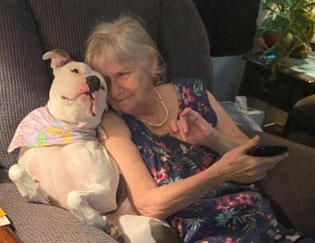
Sandra McQueeney was successfully treated at RWJUH after experiencing cardiogenic shock.
Sandra’s experience taught her to cherish each day. “Don’t give up, even when things are tough,” she says. “The will to live really does save you.”
RWJUH is part of the RWJBarnabas Health Heart and Vascular network of care. View information on cardiogenic shock and how it is treated.
No one plans on heart problems. But everyone should have a plan for them. Choose the network that handles all aspects of cardiac health. Get your heart checked.