“We had trust in every visit with Dr. DeLuca,” Gerald says. “He was always prepared and had a plan. He knew what he was doing. We felt very confident and comfortable with him.”
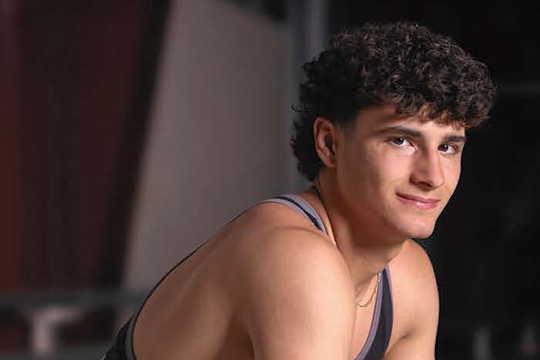
Watchung Hills Wrestler Anthony Diandrea Makes a Comeback After Knee Surgery
One day after wrestling practice at Watchung Hills Regional High School, Anthony DiAndrea felt discomfort in his right knee. Without a history of knee problems, he cautiously continued with his season, using ice and rest to treat the intermittent pain. About a month later, he took a couple of shots during practice and knew something was definitely wrong.
“It felt like something was pulling on my inner knee,” says the now-17-year old senior who lives in Green Brook. “I’d never felt that before and knew it was serious, so I went right to the trainer’s office. He ended up referring me to a doctor.”
Despite two MRIs that showed no clear evidence of a tear, the doctor felt there was a strong likelihood of one when taking into consideration Anthony’s physical examination and history. The doctor’s recommendation was surgery.
DiAndrea’s father, Gerald, a registered nurse who works as a heart transplant coordinator at Newark Beth Israel Medical Center, an RWJBarnabas Health hospital, sought out an orthopedic surgeon within the health system and scheduled an appointment with Peter DeLuca, MD, Chief of Sports Medicine at Cooperman Barnabas Medical Center and a member of RWJBarnabas Health Medical Group.
“We had trust in every visit with Dr. DeLuca,” Gerald says. “He was always prepared and had a plan. He knew what he was doing. We felt very confident and comfortable with him.”
According to Dr. DeLuca, Anthony was a textbook case. The doctor explained that the bending and twisting that wrestlers endure make them prone to knee injuries, and meniscus tears are common. The meniscus is cartilage that absorbs shock between the thighbone and shinbone. When the knee is bent and twisted, it has the potential to get pinched between those bones and tear.
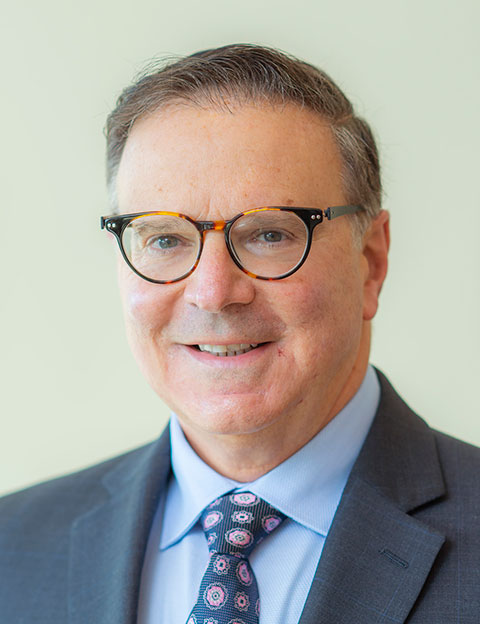
After meeting with Anthony and reviewing his MRI results, Dr. DeLuca concurred with the original doctor and suggested surgery to repair a possible small tear.
Repair and Recovery
A month after his season concluded, Anthony entered the operating room. Dr. DeLuca used an all-inside surgical technique that requires fewer incisions than the traditional method. He also used bone marrow stimulation, which promotes healing by releasing stem cells from surrounding bone.
For the first six weeks of his recovery, Anthony was on crutches. Gradually he intensified his physical therapy. He received blood flow restriction, which creates an inflow of growth hormones to help build muscle without stressing the repair; focused on balance exercises to help retrain the nerves and muscles around the knee to protect the joint; and used an AlterG Anti-Gravity Treadmill, which controls the amount of weight the patient bears.
“One of the toughest parts of my recovery was just wanting to get back,” Anthony says. “But I wanted to come back and be better, so I had to trust the process and know that I couldn’t rush it, because if I did, I was going to end up at the same place I started. Dr. DeLuca really built the idea of persistence and patience in me. It helped me learn that some things in life you really can’t rush.” In addition to Anthony being young and fit, his commitment to his rehabilitation and his determination were integral to his recovery. To gauge Anthony’s readiness to return to wrestling, Dr. DeLuca performed a series of functional tests and relied on the athlete’s feedback.
“Recovery is hard, especially for someone Anthony’s age who feels invincible [and wants to get back to sports],” Dr. DeLuca says. “But Anthony was very good. He listened to the physical therapist and obeyed our instructions. That’s probably one of the main reasons why he did so well.”
Back on the Mat
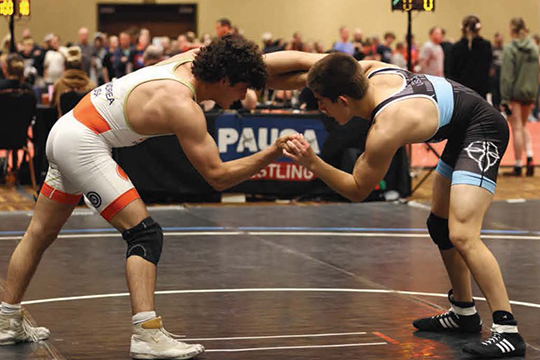
When he returned to school a few months later, Anthony slowly transitioned back to the mat and was ready for competition at the beginning of wrestling season. He wore a knee pad for support and experienced no pain.
“Dr. DeLuca made sure that when I came back, it was the right time,” Anthony says. “I was able to compete at the same level I was competing at before my injury.” As the season progressed, Anthony continued to improve and win competitions. He even earned his milestone 100th win.
“Midway through the season, Anthony looked like he jumped two levels from where he was before the injury,” Gerald says. “I wondered how it was possible, because he was off the mat almost eight months. Something just clicked.”
Anthony had a strong end to his season, finishing with three consecutive tournament wins: first place in the district tournament, first place in the regional tournament, and third place in the state tournament. Exactly one year from the date of his surgery, he committed to wrestle at the University of Pennsylvania.
“It’s remarkable that he went back to a sport that stresses the meniscus, and he did well and had no symptoms,” Dr. DeLuca says. “That in itself is a success to me.
More information about orthopedic services at RWJBarnabas Health or to find a physician.