“So many people are waiting for organs, and becoming a donor has only made my life better,” she says. “Being able to give Carlos the gift of life is a blessing, and I hope our story inspires others to do the same.”
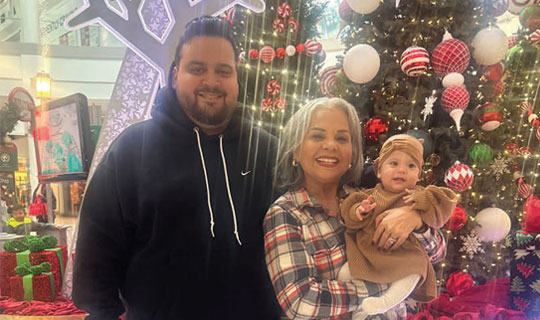
A mother's organ donation gives her son a new chance to have a healthier future.
Daisy Vasquez was concerned when she learned that her adult son, Carlos, had been diagnosed with kidney disease. In 2017, Carlos spent a month in the hospital undergoing dialysis followed by another month of dialysis at home before doctors were able to discontinue treatment. “We thought that was the end of the ordeal,” Daisy says.
Unfortunately, five years later, Carlos’ kidney function began to decline again. He had entered end-stage kidney disease, and a kidney transplant would be his best hope of returning to a normal life.
Almost immediately upon hearing the news, Daisy made the selfless choice to become a living kidney donor. “Seeing Carlos live his life fully today is all the thanks I need,” she says. “Now Carlos is in a great place—healthy and thriving. I’ve also recovered wonderfully, and I don’t regret a single moment of my decision.”
Meeting a Need
Stories like that of Carlos and Daisy are more common than many might think. About 100,000 people in the U.S. are awaiting a lifesaving organ, eye or tissue transplant, including about 4,000 who live in New Jersey, according to NJ Sharing Network.
Sadly, about 5,600 Americans die each year while waiting for a viable organ, according to Donate Life America. Living donors bridge the gap between eligible patients and available organs, allowing more people to receive the transplant surgeries they desperately need.
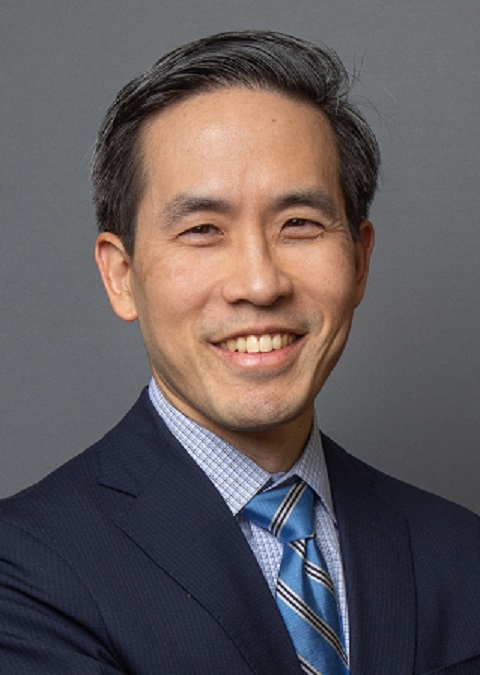
“Living donors are the kindest, most selfless people anyone can meet,” says Francis Weng, MD, a medical nephrologist at Cooperman Barnabas Medical Center (CBMC) and a member of RWJBarnabas Health Medical Group. “They are often family members, friends or acquaintances of the recipient. When they learn their loved one needs an organ, they volunteer without hesitation.”
Over the past two years, living donors accounted for about 6,000 of the nearly 28,000 kidney transplant surgeries performed nationally, Dr. Weng says. Kidneys from living donors tend to last longer on average than those from deceased donors. “Ninety-three percent of kidneys from living donors are still working after three years,” Dr. Weng says.
Underlying conditions such as diabetes, obesity or high blood pressure often trigger end-stage kidney disease. In Carlos’ case, the cause was vasculitis, an autoimmune condition that attacked his kidneys.
“I was with him when we heard the news that Carlos needed a kidney transplant, and as a mother, I wanted to help,” Daisy says. “If I could’ve given Carlos my heart, I would have.”
Life-Changing Surgery
Shortly thereafter, Daisy contacted the Living Donor Institute at Cooperman Barnabas Medical Center and started the donation process, which included education from a transplant physician, a social worker, a registered nurse and an independent living donor advocate.
“We evaluate donors like Daisy to make sure they’re ready for both the medical and psychological impact of donating,” Dr. Weng says. “Donors also have bloodwork sent to NJ Sharing Network, whose labs do tests to see if the donors are a match for their recipients.”
In March 2023, Carlos underwent a successful living donor kidney transplant with an organ from his mother. “The entire transplant team at CBMC was incredible,” Daisy says. “From start to finish, the care Carlos and I received from the staff was exceptional.”
A team approach is a defining quality of CBMC’s kidney transplant program. “It takes a village to perform a successful transplant,” Dr. Weng says. “We’re fortunate to have a team that collaborates collegially. All of us feel a strong obligation to do what’s best for our patients and to honor the gift of life, whether from a living or deceased donor.” In 2024, the CBMC team performed 383 kidney transplants.
Daisy, who recently became a grandmother, is now a staunch advocate for kidney donation. She shares her story with others and volunteers with NJ Sharing Network.
“So many people are waiting for organs, and becoming a donor has only made my life better,” she says. “Being able to give Carlos the gift of life is a blessing, and I hope our story inspires others to do the same.”
Transforming Lives Through Transplants
RWJBarnabas Health (RWJBH) is home to the largest transplant program in New Jersey, restoring lives through kidney, heart, pancreas and lung transplants. Since its establishment in 1988, the program has performed more than 12,500 organ transplants for adults and children, including 525 in 2024 alone.
RWJBH doctors and medical teams provide care for thousands of transplant patients annually. Through their participation in research and clinical trials, the program’s doctors bring the latest advances in transplants to patients. The unique, multidisciplinary program:
- Has the sixth-largest kidney transplant program in the U.S.
- Is among the nation’s top 10 for heart transplants
- Offers New Jersey’s only lung transplant program
“Our transplant physicians use advanced techniques offered at only a few of the world’s leading medical centers,” says Dr. Weng. “With the help of our experienced transplant coordinators, social workers and support staff, they deliver top-quality, compassionate care.”
Learn more about transplants at RWJBarnabas Health or request an appointment.
 View full issues of Healthy Together magazine by New Jersey region:
Northeast, serving the community of Jersey City Medical Center in Jersey City
Northwest, serving the communities of Clara Maass Medical Center in Belleville, Cooperman Barnabas Medical Center in Livingston, Newark Beth Israel Medical Center in Newark, Robert Wood Johnson University Hospital in Rahway, and Trinitas Regional Medical Center in Elizabeth.