“It’s an uplifting experience to meet with others who are going through what you’re going through,”
Robert Wood Johnson University Hospital and Rutgers Robert Wood Johnson Medical School Cardiac Amyloidosis Center Seeks to Increase Awareness and Improve Care for Patients
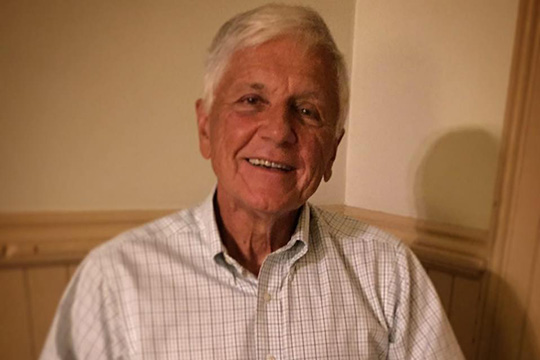
(New Brunswick, NJ) – A former collegiate athlete, Gene Witiak has stayed active his whole life. The 87-year-old retired veterinarian played baseball, basketball, tennis and golf, and was a four-year starter and captain of Susquehanna University’s basketball team, surpassing the 1,000-point career scoring mark.
That’s why he knew something was seriously wrong when he became short of breath while walking through the San Diego Zoo with his wife Joan several years ago.
“It was always on my bucket list to visit the San Diego Zoo,” Joan recalls. “When he had a conference in San Diego, we decided to go. There are a lot of hills on the zoo’s grounds and Gene became very short of breath – he couldn’t continue.”
What Gene didn’t know at the time was that he had a serious condition known as cardiac amyloidosis. Amyloidosis is caused by an abnormal protein that accumulates in organs, like the heart, kidneys, nerves or liver. Often misdiagnosed or undiagnosed due to its subtle symptoms and multiple organ involvement, at least one type of the amyloidosis can be fatal in six months.

According to Sabahat Bokhari, MD, director of the Cardiac Amyloidosis and Cardiomyopathy Center at Robert Wood Johnson University Hospital (RWJUH) and Rutgers Robert Wood Johnson Medical School (RWJMS), cardiac amyloidosis is not a rare disease, but a rarely diagnosed disease. Dr. Bokhari also serves as Professor in the Division of Cardiovascular Disease and Hypertension, RWJMS, and Director of Advanced Cardiac Imaging at RWJUH, as well as the Program Director of the Advanced Cardiac Imaging Fellowship Program.
Patients receiving heart and vascular care at the Cardiac Amyloidosis and Cardiomyopathy Center at RWJUH, an RWJBarnabas Health facility, the only center of its kind in New Jersey, benefit from specialists across a broad range of disciplines including cardiology, neurology, hematology, nephrology, pathology and bone marrow transplantation. The clinical teams work together to identify the forms of the disease and develop an effective, personalized treatment plan.
“There is a lack of awareness of this disease among the public and physicians,” Dr. Bokhari explains. “Many individuals die because they are misdiagnosed. If you are not looking for it specifically, you will not find it.”
An estimated 17 percent of Americans have the disease, or roughly 500,000 individuals. Musculoskeletal conditions such as carpal tunnel syndrome may also indicate the presence of cardiac amyloidosis.
Prior to 2013, there was a lack of advanced testing to identify amyloidosis. Patients suspected of having the condition had invasive cardiac biopsies during which heart tissue was removed for analysis. In 2013, Dr. Bokhari pioneered an advanced, non-invasive imaging technology known as a PYP scan (technetium pyrophosphate scintigraphy). A PYP scan is a nuclear medicine imaging test that helps visualize the presence and extent of amyloid deposits in the heart, aiding in diagnosis and management.
“Before the non-invasive test was available, 50 percent of patients would decline an invasive biopsy,” Dr. Bokhari explains. “There was also a lack of access to biopsy tests – there were only 120 centers nationally where patients could have biopsies. Now, there are 11,800 centers capable of performing the PYP scan.”
According to Dr. Bokhari, cardiac amyloidosis is a “multi-system” disease involving the musculoskeletal system. It can be difficult to detect, but he believes providers need to take a more broad, multidisciplinary approach to identifying it.
“We need to increase awareness not only among cardiologists, but among primary care physicians, family practice physicians, geriatricians and gastroenterologists,” Dr. Bokhari explains. “Individuals diagnosed with amyloidosis have routinely seen five doctors before receiving referral to a specialist and treatment almost six years after the onset of symptoms.”
That was almost the case for Gene, until his internal medicine physician “put all the pieces together.” Initially, Gene was diagnosed with aortic valve stenosis. He had a minimally invasive TAVR (Transcatheter Aortic Valve Replacement) procedure to replace the valve, but his symptoms didn’t improve.
After the failed procedure, Gene’s internist reviewed his entire medical history. Gene previously had bilateral carpal tunnel syndrome, two knee replacements, and lumbar stenosis – all musculoskeletal conditions that can indicate amyloidosis.
“He recommended that I be tested for amyloidosis and it came back positive,” Gene says.
Gene was referred to Dr. Bokhari. Dr. Bokhari manages Gene’s amyloidosis with a daily oral medication. There are now three FDA-approved medications to treat and manage amyloidosis: tafamidis (oral), acoramidis (oral), and vutrisiran (injection).
“I am doing well,” Gene says. “I walk to the gym five times a week and exercise for 45 minutes each time. I have always been active and doing nothing bothers me.”
Since his diagnosis, Gene has formed an informal discussion group with other cardiac amyloidosis patients in his retirement community to increase awareness about this disease. Dr. Bokhari has met with the group virtually to address their concerns and answer any questions they may have.
“It’s an uplifting experience to meet with others who are going through what you’re going through,” Gene says.
RWJUH is part of the RWJBarnabas Health Heart and Vascular network of care. To learn more about the Cardiac Amyloidosis and Cardiomyopathy Center at RWJUH, please call 1-866-NJAMYLOID / 1-866-652-6956 or visit: www.rwjbh.org/rwjuhamyloidosis