“I received excellent care from everyone, especially Dr. Ovnanian, Dr. Sesti, and Dr. Gurubhagavatula, as their expertise and support made all the difference.”
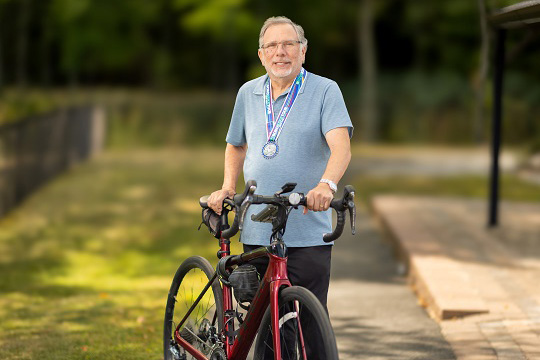
In October 2019, Arthur Bocian rushed to the Emergency Room at Cooperman Barnabas Medical Center, with his heart racing and an unusual pain in his jaw. Arthur would be diagnosed with atrial fibrillation (AFib), but a chest CT scan would also reveal something else. An incidental finding of a lung nodule.
Vagram Ovnanian, MD, a pulmonologist at Cooperman Barnabas Medical Center, explained that the nodule might have been there for years, and advised Arthur to monitor it annually. For several years, each follow-up scan Arthur had, showed no change, until January 2025. This time, the nodule had grown.
At this time, Arthur was referred to Joanna Sesti, MD, a thoracic surgeon at Cooperman Barnabas Medical Center and the Director of Thoracic Surgery, Northern Region, RWJBarnabas Health, who walked him through his options.
“When I met Arthur, I explained the two ways we could biopsy the lung nodule. One option was a needle biopsy, which is less invasive but carries a higher risk of missing cancer, the other option was a surgical biopsy, which allows us to get a definitive diagnosis, and if needed, address the cancer right away,” Dr. Sesti explained. “I wanted him to have all the information to make the decision that felt right to him.”
Arthur decided to proceed with the surgical biopsy.
On March 25, 2025, Dr. Sesti performed a robotic biopsy of the nodule and confirmed there was a malignancy. She then robotically removed the segment of the lung where the cancer was, which salvaged valuable lung tissue that might otherwise be included in a lung cancer operation.
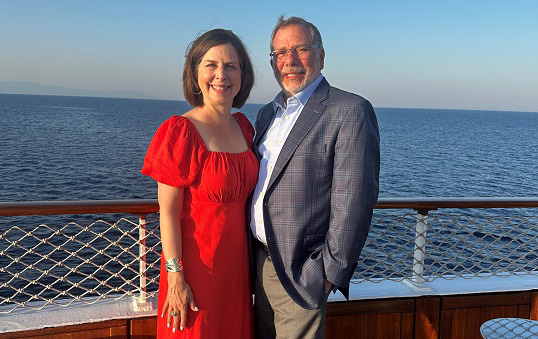
“At first, it was scary news for me and my family,” Arthur recalled. “However, Dr. Sesti was knowledgeable and experienced, so I decided to delay worry until I had a definitive reason to worry.”
At Arthur’s three-week post-op visit, Dr. Sesti confirmed the final pathology report: non-small cell lung cancer (NSCLC); however, she reassured him. Arthur recalls Dr. Sesti sharing that his margins were clean, and the lymph nodes they checked were all negative for cancer. He would not need any more surgery.
Dr. Sesti then referred Arthur to Sarada Gurubhagavatula, MD, a medical oncologist at Cooperman Barnabas Medical Center who provided Arthur with more good news. Arthur’s lung cancer was Stage 1, Grade 1, and had a type of mutation (EGFR) that is highly responsive to targeted therapies if needed in the future. She also told Arthur he would not need any additional treatment, meaning no radiation, no chemotherapy, and no medication. He just needed to be monitored with CT scans every four months.
Arthur then asked Dr. Gurubhagavatula the question that was on his mind, “Do I have lung cancer, or did I have lung cancer?” He remembers her responding, “You can use the past tense…You had lung cancer.”
“Arthur’s story is a perfect example of why early detection matters. His lung nodule was found before it caused symptoms, and we were able to treat it early. Today, him being able to say he had lung cancer, is the best outcome we could have hoped for,” said Dr. Gurubhagavatula.
With his mind at ease, Arthur focused on regaining his strength. Before surgery, he had signed up for the Five Boro Bike Tour in New York City, a 40-mile charity ride scheduled for five weeks after his operation.
“I told Dr. Sesti that I had signed up for the Five Boro Bike Tour in NYC, and asked if she thought I would be recovered enough to participate in the ride,” Arthur shared. “Dr. Sesti looked at me like I had two heads and said maybe you can try to ride 5 miles.”
However, Arthur was determined. Three weeks after surgery, he began riding short distances, starting with 7 miles, then 8 miles, then 16 miles, and eventually 26 miles. On May 4, 2025, Arthur completed the Five Boro Bike Tour with friends, riding all 40 miles, including the final 10 miles in the rain.
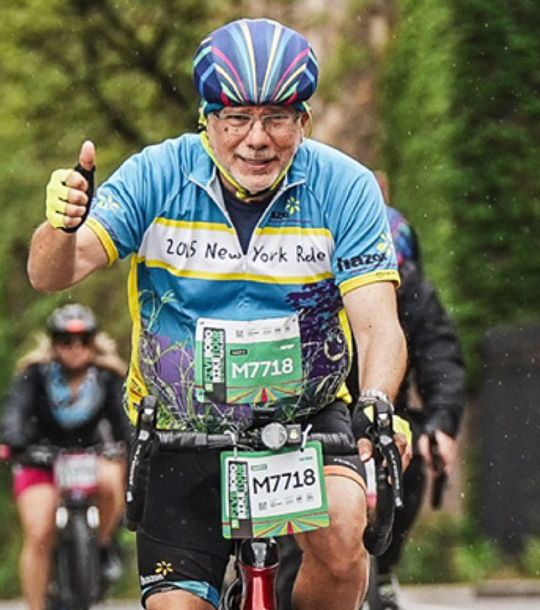
When he told Dr. Sesti about his accomplishment, he shared that she replied to him, “That’s amazing so soon after surgery, you should be written up in a journal.”
Reflecting on Arthur’s case, Dr. Sesti shared, “Our goal was not only to remove the cancer, but also help Arthur return to the activities he loves. His dedication to this charitable cause and determination to heal and stay active so soon after surgery is inspiring! I have no doubt that the novel approaches to lung cancer care including advanced robotics used at Cooperman Barnabas Medical Center are, in part, the reason he was able to complete such an amazing physical act so soon after a major operation of the lungs.”
“By the time I knew I had lung cancer, I no longer had lung cancer. It was a blessing in disguise that the nodule was caught that day,” said Arthur as he reflected on his own journey. “I received excellent care from everyone, especially Dr. Ovnanian, Dr. Sesti, and Dr. Gurubhagavatula, as their expertise and support made all the difference.”
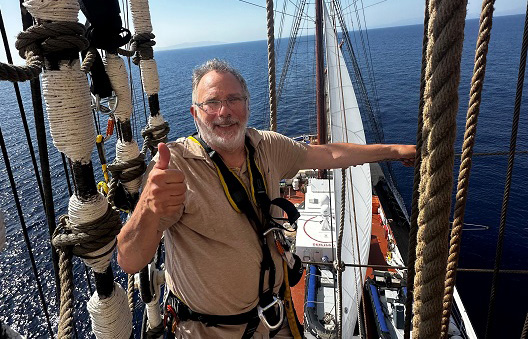
Today, Arthur remains active, enjoying retirement and time with his wife. He continues his follow-up scans with a positive outlook and deep gratitude for his medical team.
The Lung Cancer Institute
In the early stages, lung cancer often doesn’t have symptoms. As a result, being part of a lung cancer screening program is so important for those at risk. The multidisciplinary team with The Lung Cancer Institute at Cooperman Barnabas Medical Center, has taken steps to be able to diagnose lung cancer early though a free lung cancer screening program and quickly provide the follow-up care that can mean a longer life for patients.
Additionally, CBMC has introduced the Incidental Lung Nodule Program, which uses artificial intelligence to identify patients with incidental lung nodules seen on scans ordered for other reasons, and enrolls them in a program where a specialist can provide appropriate follow up and recommend interventions if and when they become necessary. This allows the team to catch lung cancers early, even in patients with no risk factors who would otherwise not qualify for lung cancer screening.
If lung cancer is found, the multidisciplinary team at CBMC offers all forms of modern treatment modalities. For example, using the most up-to-date robotic surgical systems, we can remove lung cancers with very little downtime and pain. This allows patients to heal faster and get back to living their lives sooner. It also avoids delays in patients that need additional treatment such as chemotherapy or immunotherapy.
RWJBarnabas Health, together with Rutgers Cancer Institute, the state’s only National Cancer Institute-designated Comprehensive Cancer Center, brings the most advanced treatment options close to home.
To schedule an appointment with one of our thoracic cancer specialists, call 844-CANCERNJ.