“I cannot explain how comforting, the doctors, the nurses and the desk staff that I’ve interacted with have been. I am so happy that I made the decision to go to Cooperman Barnabas Medical Center.”
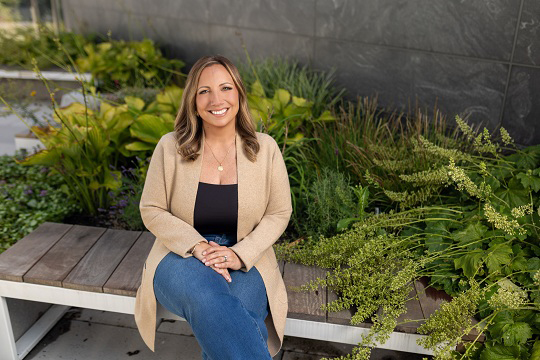
A year can change everything. In spring 2025, Nicole Boyce was navigating a breast cancer diagnosis and preparing for a year that would include surgery, chemotherapy and ongoing treatment. By July 2026, she was stepping into an entirely different kind of new beginning, starting her first role as an elementary school principal after 20 years as a teacher.
“2025 me would be really proud of 2026 me,” Nicole said.
Getting to that moment meant moving through a year Nicole never expected. A mother of two, she was accustomed to a busy life centered around her family, teaching and keeping up with her children’s year-round sports including softball for her daughter and ice hockey for her son. When they had downtime, the family loved spending time together and heading down the shore.
Even with a busy routine, Nicole had always made it a priority to keep up with her annual gynecology appointments. She scheduled her first mammogram at 40, which came back clear. When she returned for her next routine mammogram at 41, she was called back for additional imaging and eventually a biopsy.
It was March 2025 when Nicole had been diagnosed with stage I breast cancer, including invasive ductal carcinoma and ductal carcinoma in situ (DCIS). Her cancer was also HER2-positive, meaning her treatment would ultimately extend beyond surgery.
After this diagnosis, Nicole and her family began considering where she should receive her care. At first, she thought traveling to New York City might be the best option. But as she spoke with friends and family, she repeatedly heard positive experiences about the breast cancer care available at Cooperman Barnabas Medical Center, which serves as the northern destination for the integrated oncology services of RWJBarnabas Health and Rutgers Cancer Institute, the state’s only National Cancer Institute-designated Comprehensive Cancer Center.
After meeting with the breast care team, Nicole felt confident she had found the right place for her treatment. “I cannot explain how comforting, the doctors, the nurses and the desk staff that I’ve interacted with have been,” she said. “I am so happy that I made the decision to go to Cooperman Barnabas Medical Center.”
Nicole underwent her double mastectomy and reconstruction. Her cancer had been removed but because it was HER2-positive, her treatment was not over. Nicole then met with George Raptis, MD, medical oncologist at Cooperman Barnabas Medical Center, and Director of Oncology Services for the Northern Region, RWJBarnabas Health (RWJBH) and Rutgers Cancer Institute.
Beginning June 2025, Nicole underwent chemotherapy every Wednesday for 12 weeks. She also chose to use cold capping to help preserve her hair, an experience she described as difficult, but one that ultimately worked for her.
After completing chemotherapy, Nicole continued returning to the infusion center every three weeks for HER2-targeted treatment. She completed her final infusion in May 2026.
Throughout those months of treatment, Nicole developed close relationships with the people caring for her. I’m beyond grateful for Dr. Raptis, his nurses and everyone in the Cancer Center. “These are gifted people. They can do this day in and day out and remain positive and helpful every time you see them. I feel like that is a gift,” Nicole said.
“Breast cancer treatment can involve many different phases of care, and having a coordinated team supporting a patient throughout that journey is incredibly important,” shares Dr. Raptis. “Nicole’s experience reflects the comprehensive approach we strive to provide, bringing ongoing support and personalized care close to home.”
But moving forward for Nicole has meant more than completing treatment and beginning a new career.
Friends and family regularly reach out to Nicole asking whether she would be willing to speak with someone who has recently been diagnosed or is considering the same type of reconstruction she underwent. Nicole shares her experience, answers questions and offers the kind of reassurance she once sought herself.
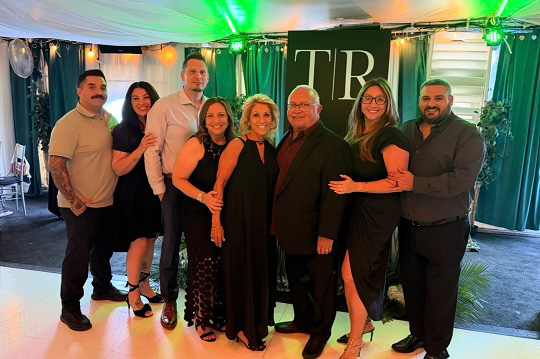
Her advice to other women is to trust themselves, talk to others and allow those connections to become another source of strength. “Keep a positive mind and surround yourself with friends and family. It creates another community, not one that you necessarily want to be a part of, but it’s a special community to be a part of. Retelling your story and letting someone know that there is a light at the end of the tunnel, I feel like that has been the most therapeutic for me through all of this,” Nicole adds.