The care was incredible. They all encouraged me and made me feel like I was their most important patient. They kept telling me, ‘We’re going to get through this,
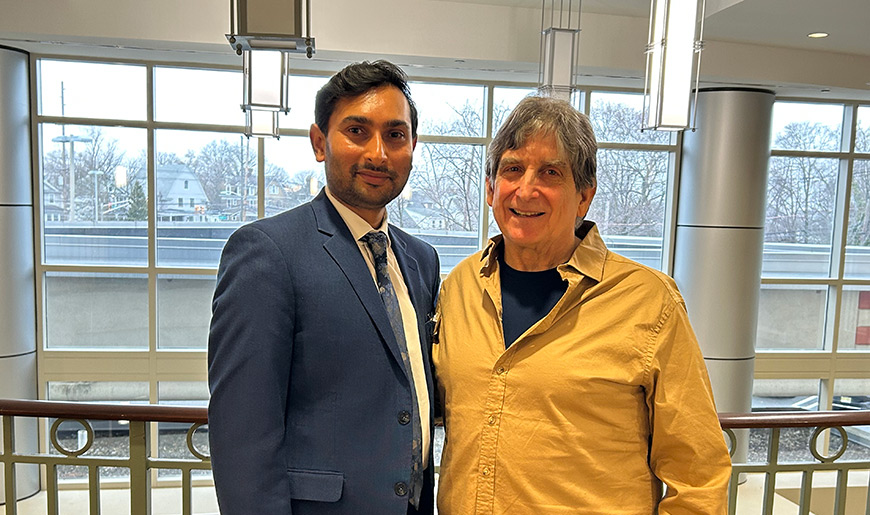
Eighteen months after being diagnosed with a rare aggressive form of colorectal cancer, Steve is grateful to be back to living his life and thankful to the team at Robert Wood Johnson University Hospital (RWJUH) Somerset’s Steeplechase Cancer Center. Together with Rutgers Cancer Institute – the state’s only NCI-designated Comprehensive Cancer Center – RWJUH Somerset provides the highest quality cancer care close to home, including access to leading clinical trials.
“The care was incredible. They all encouraged me and made me feel like I was their most important patient. They kept telling me, ‘We’re going to get through this,’” he said.
Steve, 65, a retired IT administrator, was diagnosed with signet ring cell carcinoma in August 2024 after a colonoscopy. A multi-disciplinary team at the Steeplechase Cancer Center, comprised of surgeons, oncologists, pathologists, radiologists, radiation oncologists, nurses, patient navigators and social workers, reviewed his test results and recommended a plan of care to address his medical and psycho-social needs.
“Working together, our team develops individualized treatment plans for our cancer patients so they can achieve the best possible outcomes,” said Eshan Patel, MD, medical director of the Steeplechase Cancer Center.
“Our community benefits from having a group of specialists who are dedicated to the treatment of colorectal cancer,” said colorectal surgeon Brendan Scully, MD. “Our patients see their doctors and get their treatment in one place which further strengthens the communication between our health care providers and ensures a coordinated approach to care.”
Steve underwent radiation and chemotherapy treatment at the cancer center for several months before having surgery in May 2025 by Dr. Scully to remove his colon. Removal of the colon was recommended because of the aggressiveness of his form of cancer and the ongoing symptoms he experienced from chronic ulcerative colitis, Dr. Scully said.
He continues to follow up with Dr. Scully and Dr. Patel, his medical oncologist who is a member of RWJBarnabas Health Medical Group.
During his treatment, the support from his wife, children, sisters, extended family and friends was – and still is – vital to his ongoing care, he said. This includes his caregivers at the Steeplechase Cancer Center, including his physicians, nurses, nutritionist, patient navigator and receptionists.
“They were all unbelievably comforting,” he said.
Last summer, not long after his surgery, Steve was able to participate in many outdoor activities, including a cornhole tournament and swimming at the beach. He is also an active volunteer with the Somerville Elks and the Project Management Institute of New Jersey (PMINJ).
As we mark National Colon Cancer Awareness Month, Steve shares his story as a way of giving back and helping others. Steve was at higher risk for colorectal cancer because he suffered from chronic ulcerative colitis. He encourages everyone to be proactive and pay attention to symptoms such as bloody or dark stools and diarrhea and talk to your doctor about any concerns.
“Get it checked. Don’t mess around. The earlier you get checked, the better chance you can be treated,” he says.
“In most cases, colorectal cancer is asymptomatic,” says Dr. Scully. “Don’t delay getting screened because you are not having any symptoms.”
“Colorectal cancer is preventable and curable,” adds Dr. Patel. “A colonoscopy is the gold standard for colorectal cancer screening and is recommended beginning at age 45 for those of average risk. Individuals at high risk for colorectal cancer need to be more vigilant. Talk to your doctor to determine at what age you should be screened.”