 When Do You Need to See a Breast Surgeon?
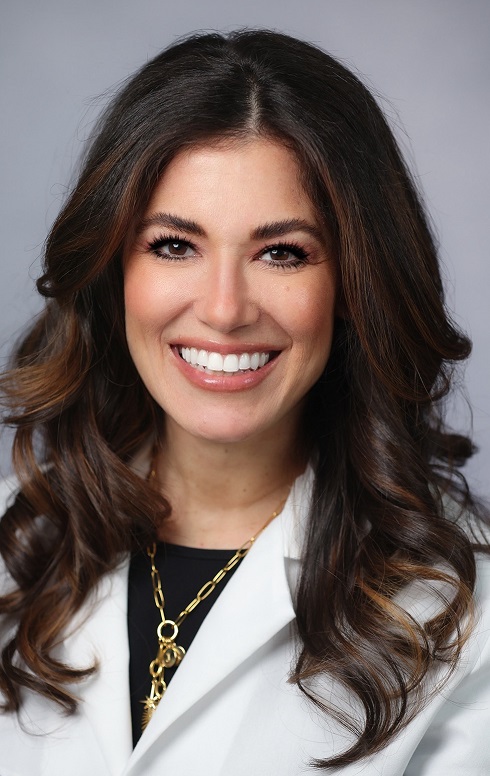
Natalie Lopyan, MD, a breast surgical oncologist at the Cancer Center at Robert Wood Johnson University Hospital Hamilton (RWJUH Hamilton), together with Rutgers Cancer Institute, New Jersey’s only NCI-designated Comprehensive Cancer Center, provides answers to help us understand the role and care of a breast surgeon.
Q: Many people assume you only see a breast surgeon if you have cancer. Is that true?
A: Not at all. While breast surgeons do treat cancer, we also evaluate and manage a wide range of non-cancerous breast concerns. In fact, many patients we see do not have cancer. Our role is to assess findings, guide next step and determine whether anything more serious needs to be ruled out or treated.
Q: What are the most common reasons someone would be referred to a breast surgeon?
A: One of the most common reasons is an abnormal finding on a mammogram or breast ultrasound. This could be something like a mass, calcifications or an area that simply looks different from prior imaging. Patients are also referred for a new breast lump, nipple discharge, breast pain that doesn’t resolve or skin changes such as dimpling or redness. Even if these symptoms turn out to be benign, it’s important to have them properly evaluated.
Q: If I feel a lump, should I go straight to a breast surgeon?
A: Your first step is often your primary care provider or OB/GYN, who may order imaging. If something needs further evaluation, you’ll be referred to a breast surgeon. They key is not to delay getting it checked by a medical expert.
Q: What happens during the first visit?
A: Your visit typically includes a detailed discussion of your history, a clinical breast exam and a review of any imaging you’ve had. If additional imaging or a biopsy is needed, we coordinate quickly with the team at the hospital. Our goal is to give you clear answers and a plan, whether that means reassurance, monitoring or treatment.
Q: Does a visit with a breast surgeon mean I’ll need surgery?
A: No. In fact, many patients do not require surgery at all. Some findings only need routine monitoring while others may be managed with minimally invasive procedures. If surgery is recommended, we take time to explain all the options, including breast-conserving approaches whenever appropriate.
Q: Are there non-cancerous conditions that a breast surgeon treats?
Yes. We commonly treat benign conditions such as cysts, fibroadenomas, infections and high-risk lesions that may require closer follow-up. We also help patients who are at increased risk for breast cancer understand their options for surveillance or risk reduction.
Q: What is a personal risk for breast cancer, and what should someone be doing differently because of it?
A: This is one of the most important and often overlooked questions to ask. Breast cancer risk is not the same for every woman. While general screening guidelines are helpful, they don’t always reflect a person’s unique health profile. When I meet with patients, I look beyond just age. We talk about family history, genetic factors, breast density, lifestyle, reproductive history and any prior breast findings. All these elements help me better understand a person’s level of risk.
One in eight women will be diagnosed with breast cancer in her lifetime. RWJUH Hamilton, RWJBarnabas Health and Rutgers Cancer Institute offer the latest in comprehensive breast health services including mammograms, 3D mammograms, breast MRI, genetic testing, fellowship-trained breast surgeons and more. And with facilities conveniently located throughout New Jersey, finding one close to home is simple and no prescription is required for a screening mammogram. It is recommended that women receive their first screening mammogram at age 40 and continue annually. When detected, early breast cancer is easier and more successful to treat.
Early detection of breast cancer saves lives.
Learn more about breast cancer screening and mammogram options.
Or call 855-654-5393 to schedule an appointment today.