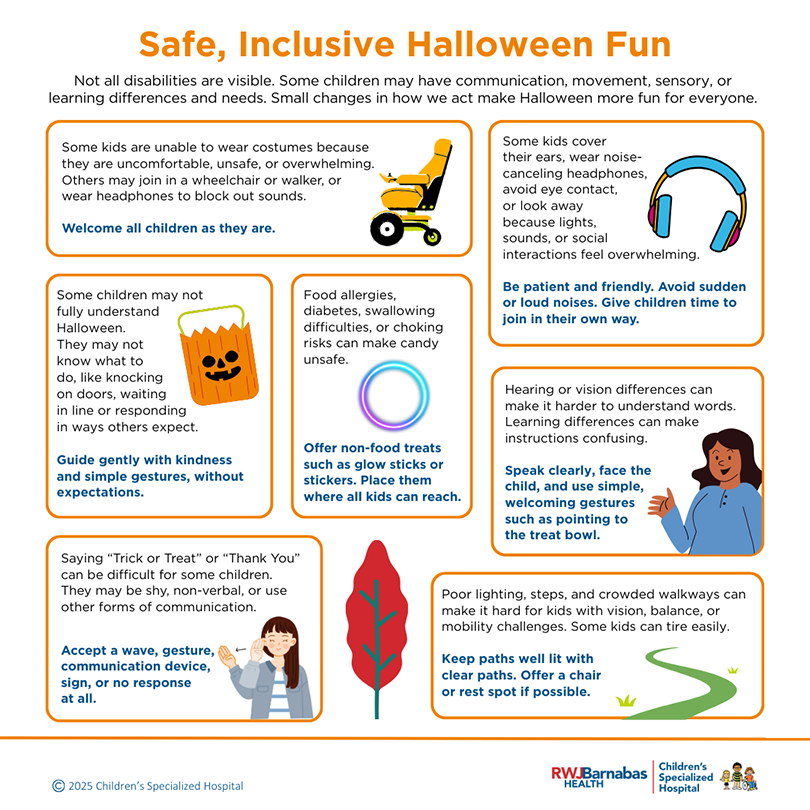
Halloween should be a night of fun, imagination, and community. But for many children — especially those with sensory challenges or developmental differences — the typical tricks and treats can become overwhelming. With a bit of planning and awareness, we can transform Halloween into a more welcoming experience for all kids.
Why Inclusive Halloween Matters
Kids with sensory processing differences may find bright lights, loud sounds, or scratchy costumes overwhelming. Others, including children with mobility or communication differences, can feel left out simply because the celebration isn’t designed with their needs in mind. Making Halloween inclusive doesn’t mean changing the holiday — it means expanding it so every child can safely and joyfully participate in their own way.
As Dr. Malia Beckwith, AVP of Ambulatory Medical Practices and Section Chief of Developmental Behavioral Pediatrics, Children’s Specialized Hospital, explains, “When we build sensory-friendly and flexible experiences, we’re not just accommodating children with differences — we’re creating celebrations that everyone can enjoy together.”
Core Principles for an Inclusive Halloween
Creating a safe and inclusive Halloween starts with intention. It is important to understand that small changes in how we plan and celebrate can make a big difference in how every child experiences the night. These core principles serve as guideposts for families, neighbors, schools, and community organizers.
- Start with Choice and Consent - The foundation of inclusion is letting children lead the way. Encourage kids to share what feels fun and what feels overwhelming and let those preferences shape your plans. Some children may love dressing up but do not want to trick-or-treat, while others might prefer handing out candy at home. Respecting a child’s “yes” and “no” helps them feel secure and valued.
- Reduce Sensory Triggers - Halloween is full of bright lights, loud sounds, and unexpected surprises that can overstimulate children with sensory sensitivities. You can make your environment more comfortable by dimming flashing lights, lowering music volume, and avoiding decorations that move or make sudden noises. If your child uses noise-canceling headphones or sunglasses, you might consider incorporating them into their costume to make it feel natural.
- Plan Ahead and Communicate - Inclusion thrives when communities work together. Talk with neighbors, teachers, and event organizers about your plans or your child’s needs. A simple message outlining your plans helps set expectations. For event organizers, sharing accessibility details for your event on community pages or flyers signals to families that everyone is welcome. Equally important, parents should communicate with their children about what to expect. Review the plan together, talk through any changes, and let them help make choices, so they feel informed, prepared, and included in the process.
- Normalize Different Ways to Participate - There’s no single “right” way to celebrate Halloween. By normalizing these differences, we show children that inclusion means embracing individuality. When adults respond with patience and kindness, it reinforces that all forms of participation are valued and celebrated.
Halloween has the power to bring neighborhoods and families together in the spirit of imagination and play. When we take the time to think about safety, accessibility, and sensory needs, we turn a single night of fun into a lasting message of inclusion and care. By celebrating with empathy and creativity, we make space for all children to experience the joy of Halloween in a way that feels right for them.