Mat Mahoney and his wife, Brielle, had just closed on their first home. Their son, Dax, was just about to celebrate his first birthday. Between working as an elevator mechanic, spending time with his family, enjoying his favorite hobbies, including cheering on the Giants, Knicks, and Yankees, and being a car enthusiast, life felt busy in the best way. At 35 years old, Mat never thought he would have a stroke. Now, he’s sharing his story so others don’t ignore the signs.
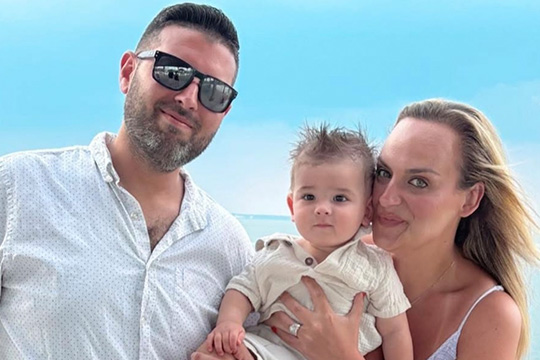
Looking back, Mat realizes the warning signs started days before he went to the hospital.
“I was in church, and I went up to receive the Eucharist, and I suddenly couldn’t speak. I felt tongue-tied, but I didn't think anything of it,” Mat recalls. Later that day, the right side of his body felt strange. “I thought it was just a pinched nerve in my right arm. I figured I was alright and it would go away.”
Instead, the symptoms persisted. A few days later, while working overtime, Mat called a fellow elevator mechanic to request a repair part. “He told me I didn’t sound good, asked if I was okay, and urged me to go to the hospital. I told him I was fine.”
Still unconvinced anything was wrong, Mat brushed it off. Moments later, he explained the elevator issue to a building employee, who also asked him if he was feeling okay.
By then, the growing concern from others kept replaying in his mind. “It just kept echoing: Go to the hospital,” Mat says.
He decided to make what he expected to be a quick stop at the nearest emergency department, Robert Wood Johnson University Hospital (RWJUH) Rahway, before heading to his next service call. “I just figured they were going to tell me I was fine and send me back to work.”
Instead, everything happened fast.
Life-Saving Care in Action
When Mat told the emergency department staff that the right side of his body felt different, they acted immediately. “Before I could turn around to sit, someone already came out with a wheelchair,” he recalls.
Following rapid imaging, Mat received news he never expected. “When they told me I was having a stroke, I remember thinking, I’m 35. What do you mean? That doesn’t happen to someone my age.”
He was quickly transferred to Cooperman Barnabas Medical Center (CBMC), a Joint Commission-certified Comprehensive Stroke Center equipped to provide advanced treatment for complex strokes and neurovascular emergencies.
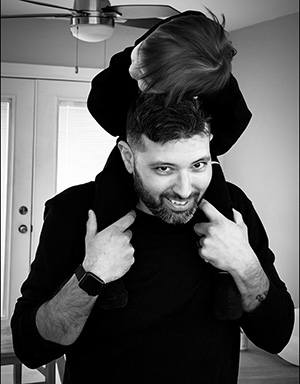 Upon arriving, Mat’s care began immediately under the charge of Siddhart Mehta, MD, Medical Director of the Neurocatheterization Lab at Cooperman Barnabas Medical Center and member of RWJBarnabas Health Medical Group.
Mat was experiencing a severe ischemic stroke caused by a blockage of the left middle cerebral artery, one of the major arteries supplying the brain. Dr. Mehta and the neurointerventional team performed an emergency mechanical thrombectomy, a minimally invasive procedure to remove the clot and restore blood flow to the brain.
The procedure successfully reopened the blocked artery. Dr. Mehta also identified significant underlying narrowing of one of the artery’s branches, believed to represent intracranial atherosclerotic disease, which required continued medical management and aggressive control of Mat’s vascular risk factors.
“In a stroke like Mat’s, every minute matters,” Dr. Mehta says. “Our immediate goal was to restore blood flow and protect as much brain function as possible. But treating the stroke was only the beginning—we also needed to understand why this happened and reduce his risk of another stroke.”
Mat credits the CBMC team with guiding his family through some of their darkest hours. “Dr. Mehta was fantastic,” Mat says.
“And Portia, who was one of my nurses, was amazing. She went above and beyond every single time. My wife, my brothers, and my parents loved her. They wanted her to be my nurse the entire time.”
A Different Perspective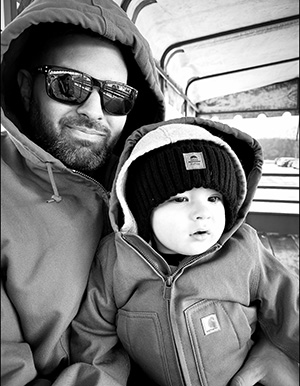 While the procedure saved his life, recovery had its own challenges. “It took me months just to be able to use the right side of my body again,” Mat shares.
Throughout his recovery, Dr. Mehta and the stroke team continued to monitor Mat with follow-up imaging and medical management while emphasizing lifestyle changes and aggressive stroke prevention. His follow-up MRI showed no new stroke.
“It definitely made me take my health more seriously,” Mat says. “I feel fortunate to have Dr. Mehta as my doctor. He genuinely cares about his patients’ well-being and always took the time to explain why lifestyle changes were so important, not just tell me what to do. Dr. Mehta didn’t just treat my stroke, but he helped change my life.”
Recently, Mat completed his scheduled follow-up care.
Today, Mat hopes his story encourages others to recognize stroke symptoms and seek care immediately. “A stroke can happen to anyone. If something doesn’t feel right, don’t ignore it. I almost did and was just going to go to my next work call.”
“Mat’s recovery has been remarkable,” Dr. Mehta says. “Restoring blood flow during his stroke was the first step. What has been equally rewarding is seeing him take control of his health afterward. His story demonstrates that comprehensive stroke care doesn’t end with a successful procedure, it continues with understanding the cause, reducing risk factors and working to prevent the next stroke.”
While missing his son Dax’s first birthday last year because of his stroke remains one of the hardest moments of his journey, Mat is now looking forward to celebrating his son’s second birthday in October, a milestone he’s especially grateful to be here for.
Know the Signs: BE FAST
Dr. Mehta encourages everyone to recognize the warning signs of stroke and call 911 immediately.
B — Balance: Sudden loss of balance or coordination
E — Eyes: Sudden vision loss or changes in vision
F — Face: Sudden facial drooping or numbness
A — Arm: Sudden weakness or numbness of an arm or leg
S — Speech: Sudden difficulty speaking or understanding speech
T —Terrible Headache
Call 9-11 immediately.
“Stroke can happen at any age,” Dr. Mehta says. “If you notice any of these symptoms, call 911 immediately. Don’t wait to see if they improve. With stroke, every minute matters.”
At RWJBarnabas Health, we understand that every second counts when treating a stroke. That’s why our expert teams of stroke specialists are ready around the clock to deliver rapid, advanced care for complex stroke cases. As New Jersey's largest academic health care system, we ensure quick access to life-saving stroke treatments close to home. To learn more, click here.